

BCI
Student-led research exploring brain–computer interfaces and applied neurotechnology.
Overview
Project Details
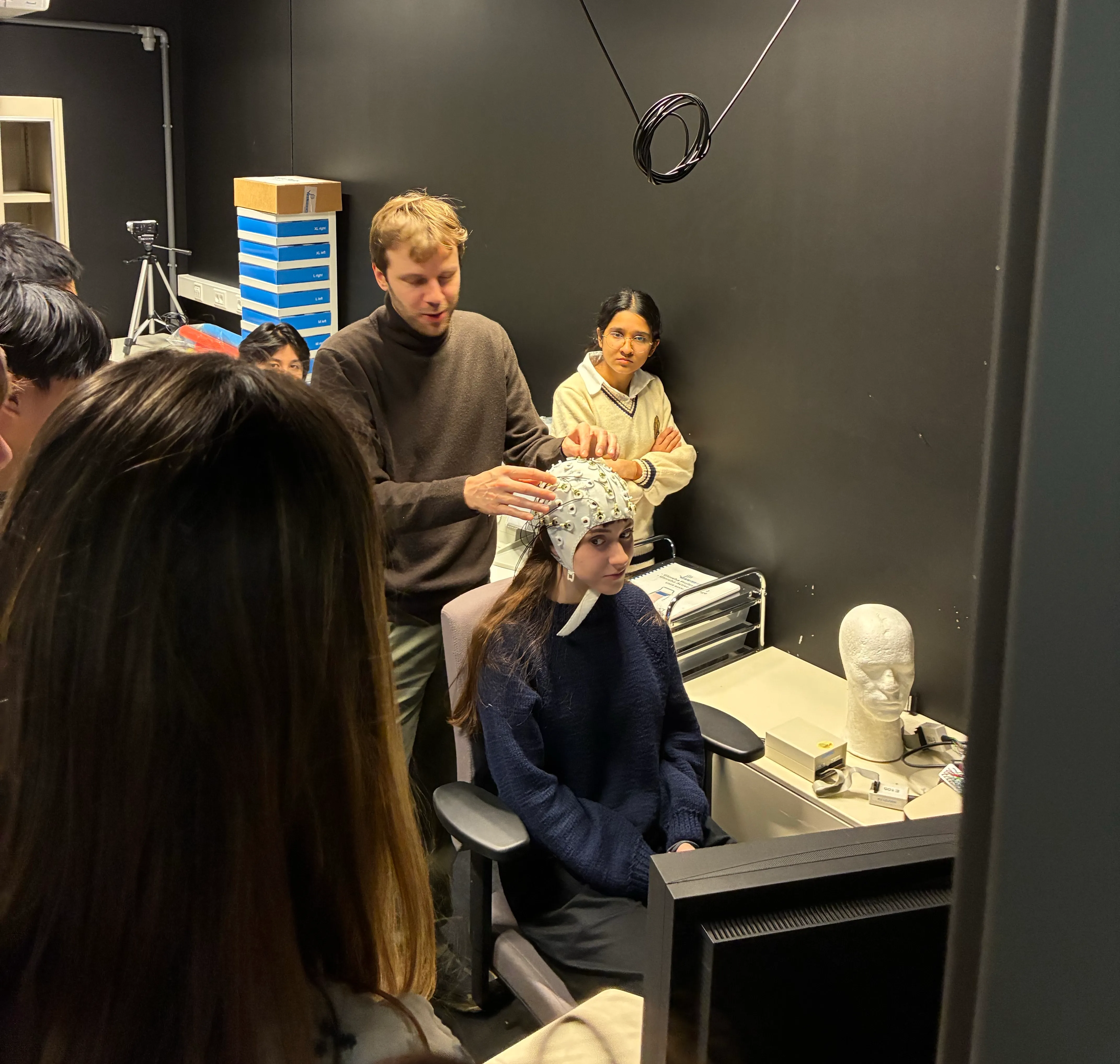
Brain–Computer Interfaces (BCI) explore direct communication pathways between the brain and external devices. This project focuses on understanding and developing BCI systems through a combination of signal processing, experimentation, and hands-on prototyping.
Students involved in the project work collaboratively to explore both the theoretical foundations and practical challenges of BCI technology, with an emphasis on learning, experimentation, and research-driven development.
Focus Areas
Signal Acquisition & Processing
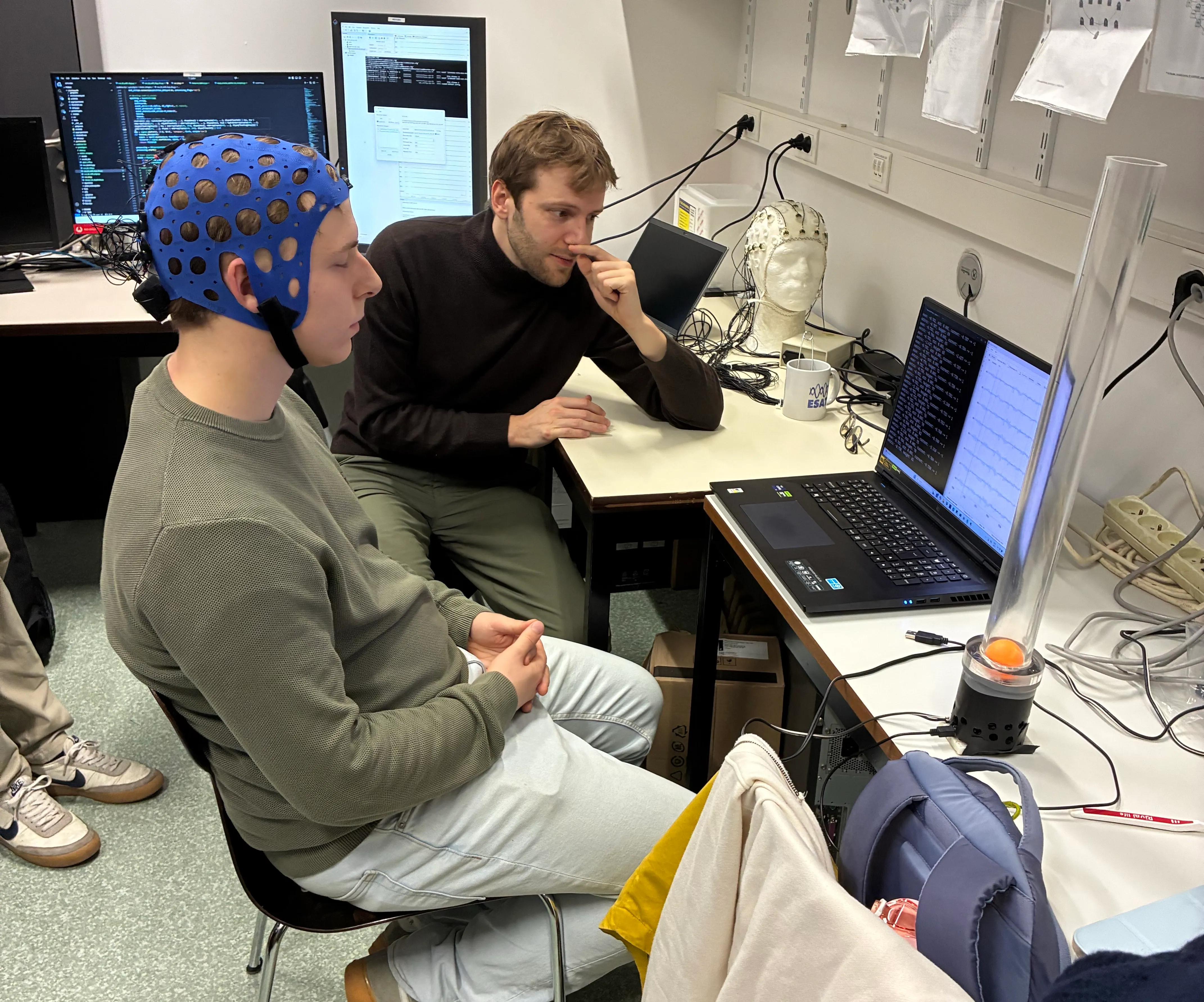
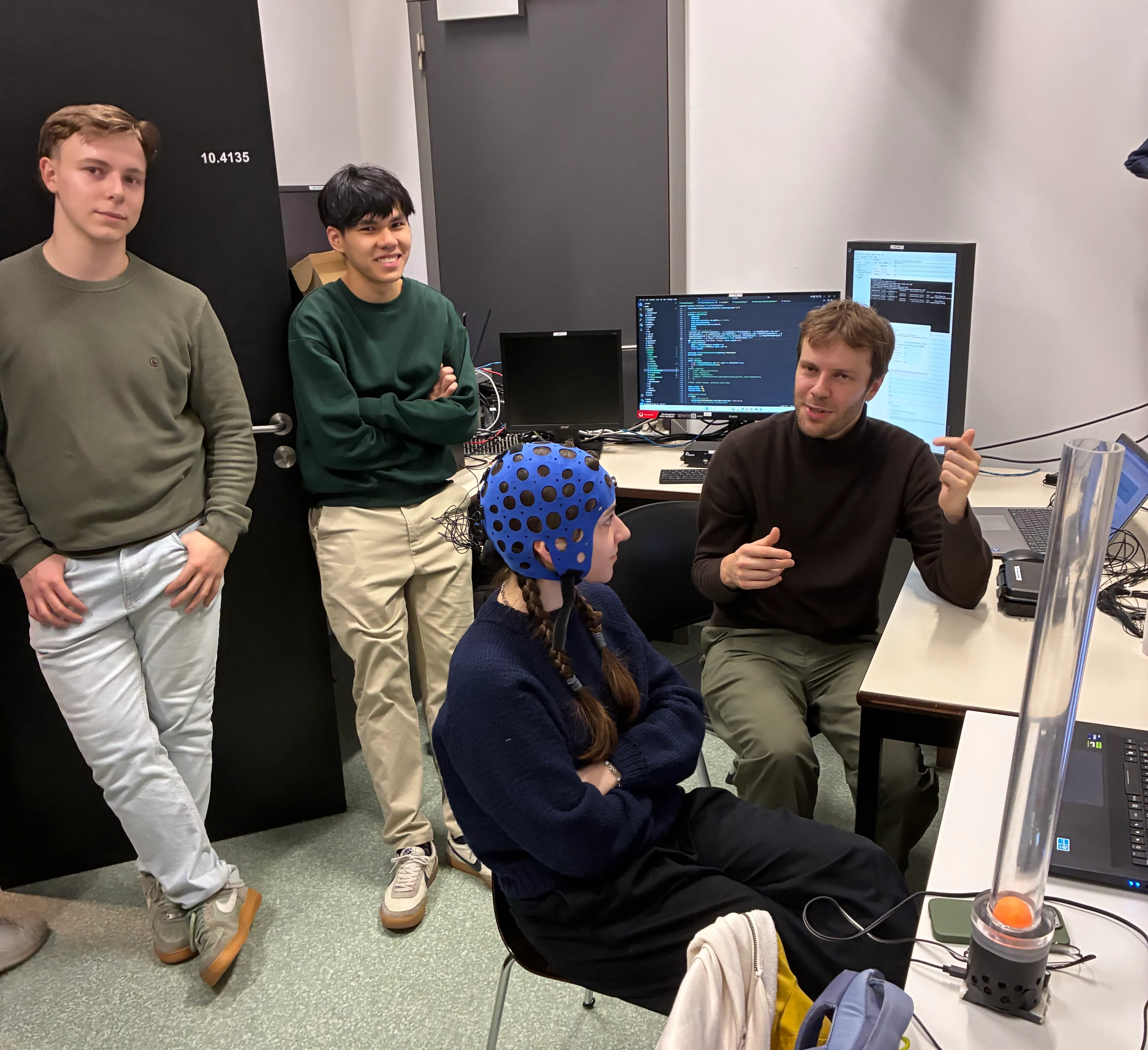
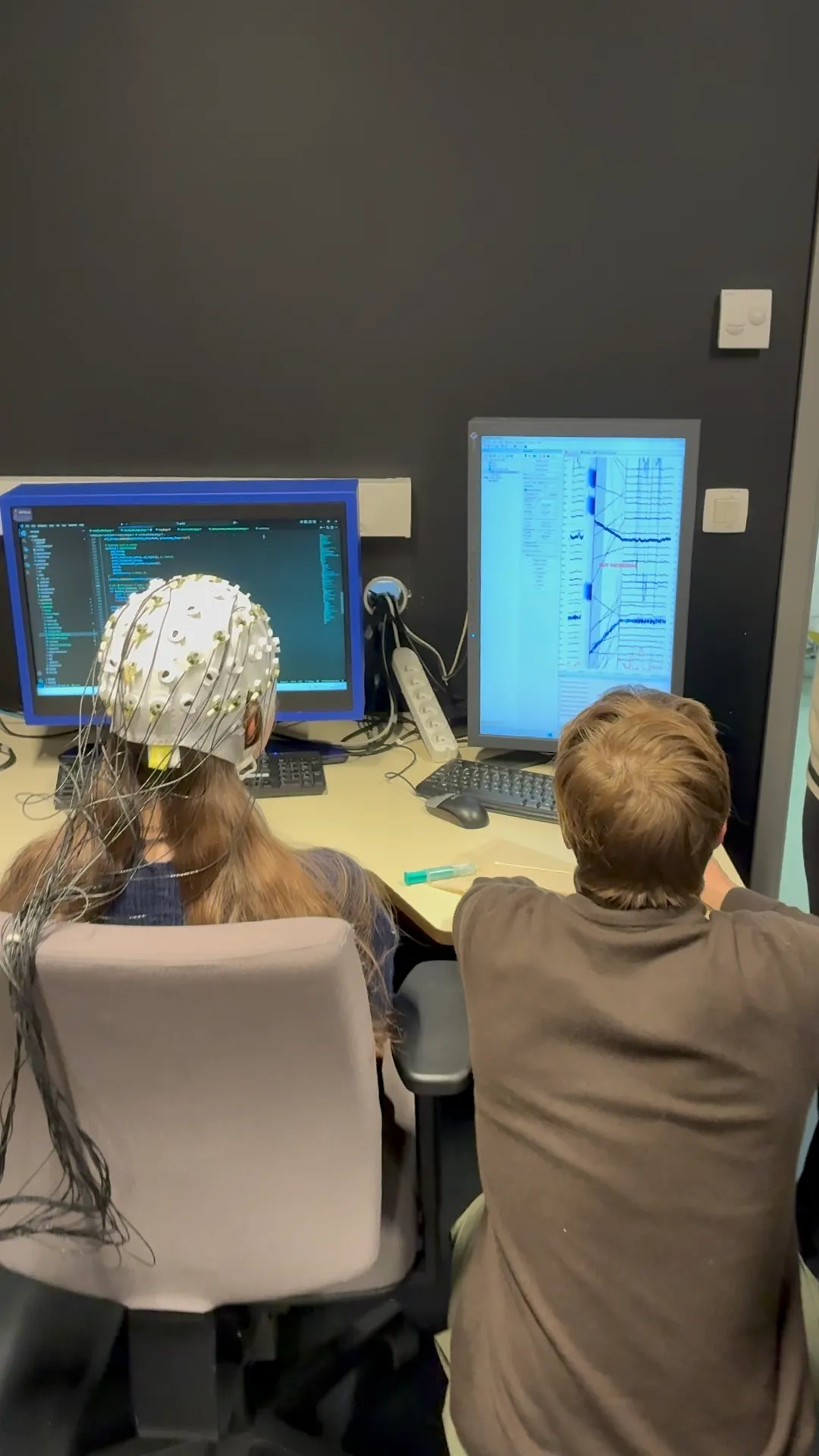
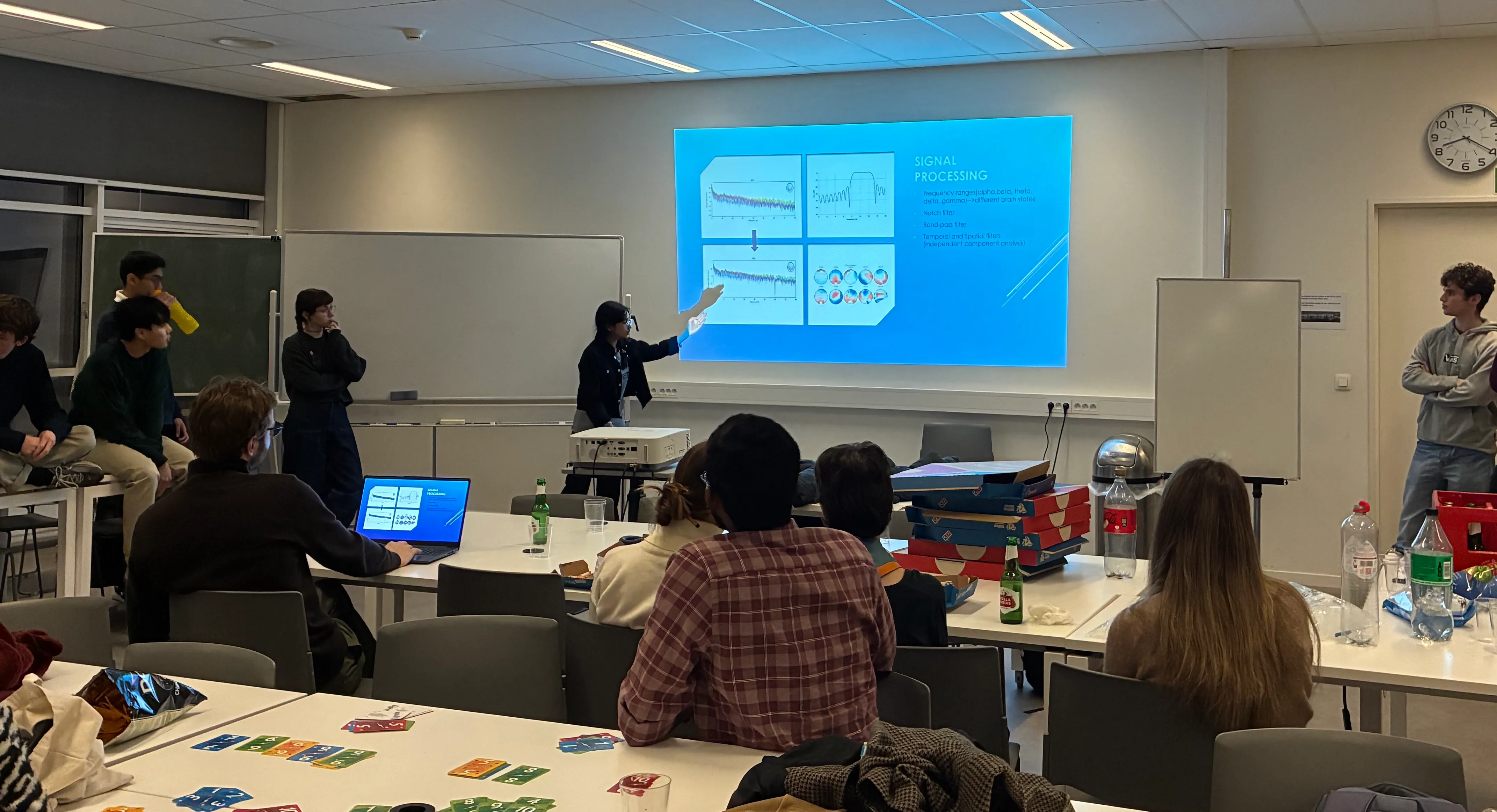
This focus area centers on acquiring brain signals and preparing them for analysis. Work includes understanding recording techniques, filtering and preprocessing data, and exploring how raw neural signals can be transformed into usable information.
Machine Learning & Decoding
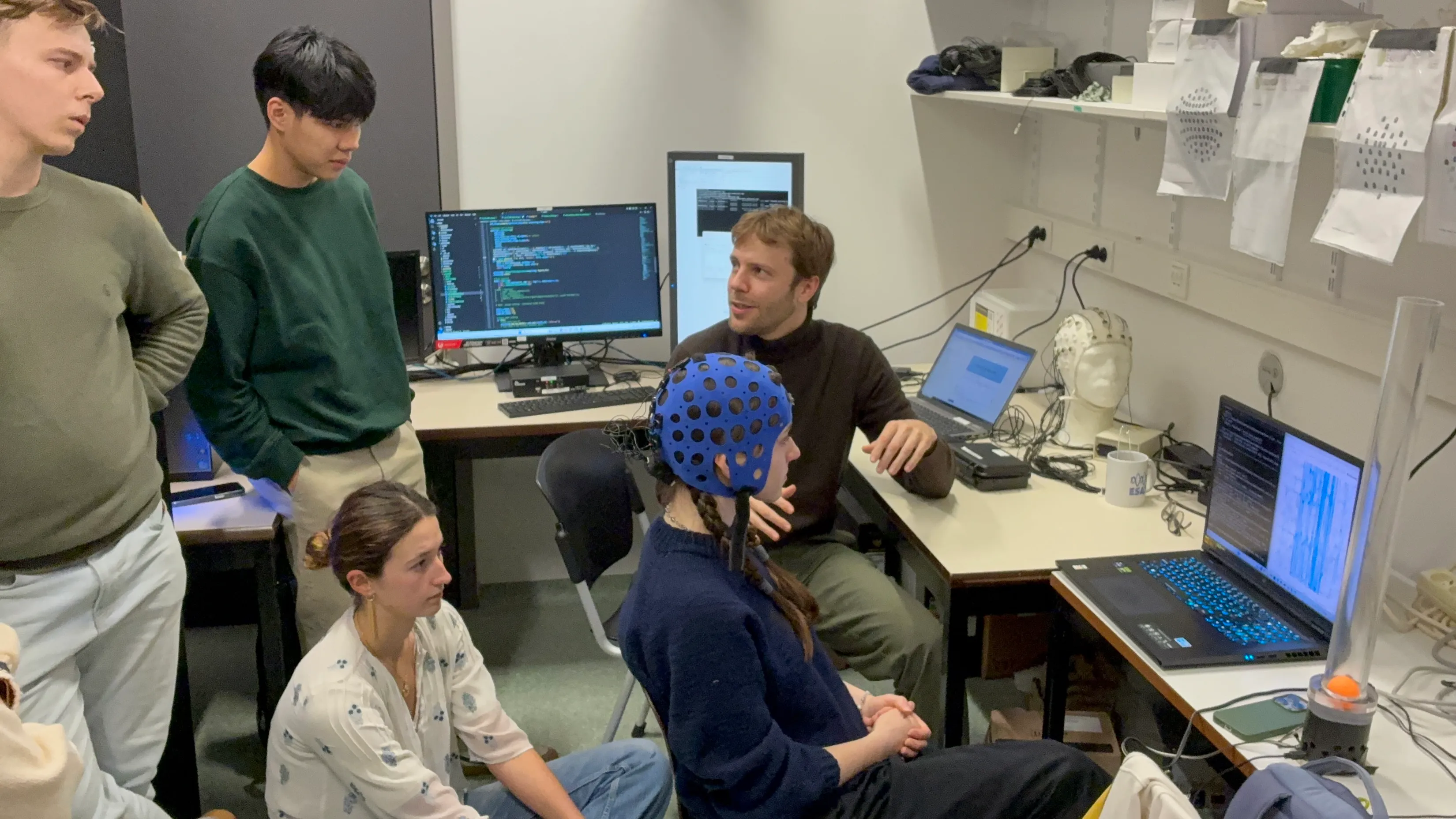
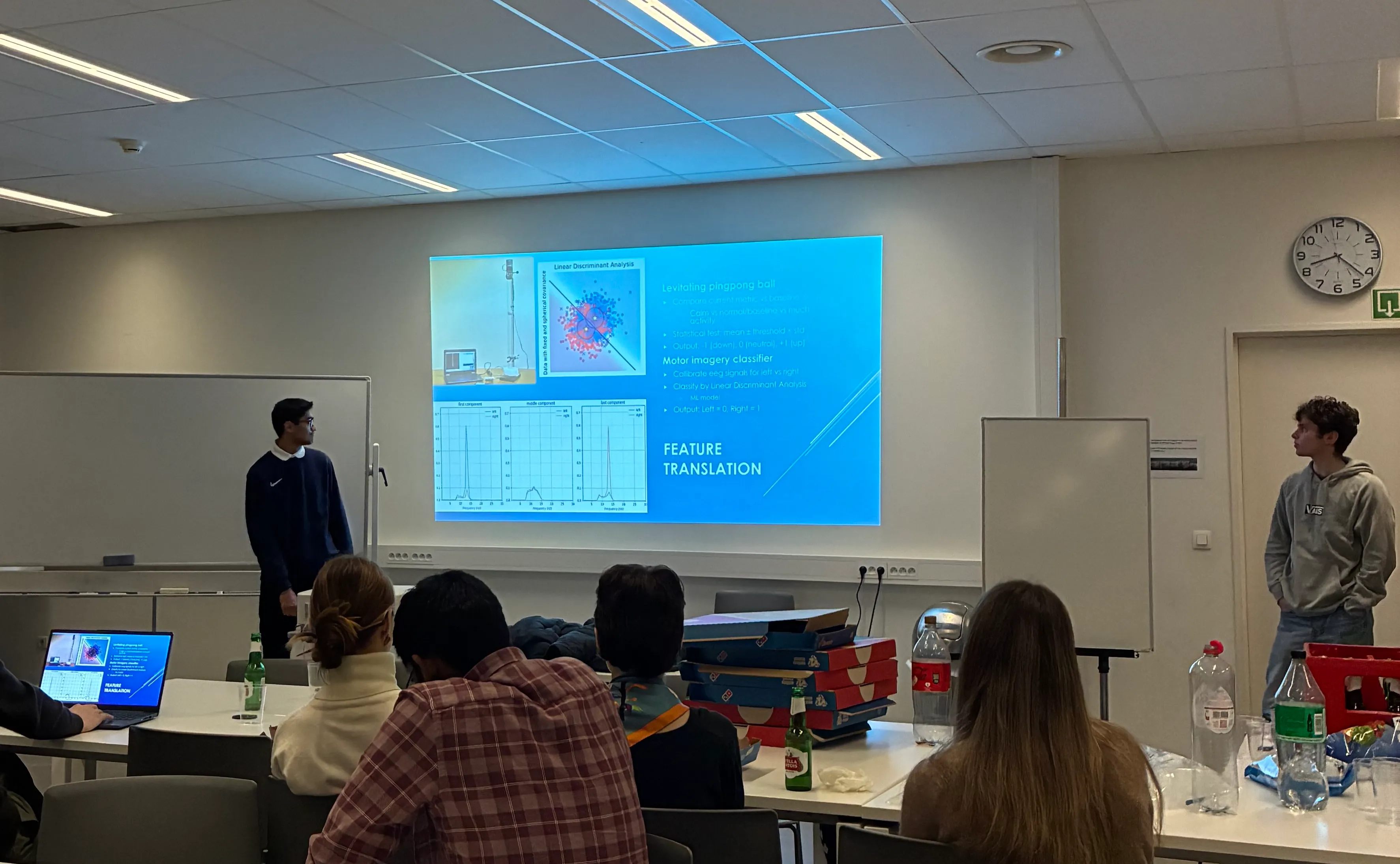
Students explore methods for interpreting neural data using statistical models and machine learning techniques. This includes experimenting with decoding approaches, evaluating model performance, and understanding the limitations and challenges of translating neural signals into meaningful outputs.
Experimentation & Evaluation
This focus area involves designing experiments to test BCI systems and assess their effectiveness. Members work on structuring experiments, collecting and analyzing results, and iterating on system designs based on experimental findings.
Applications & Prototyping
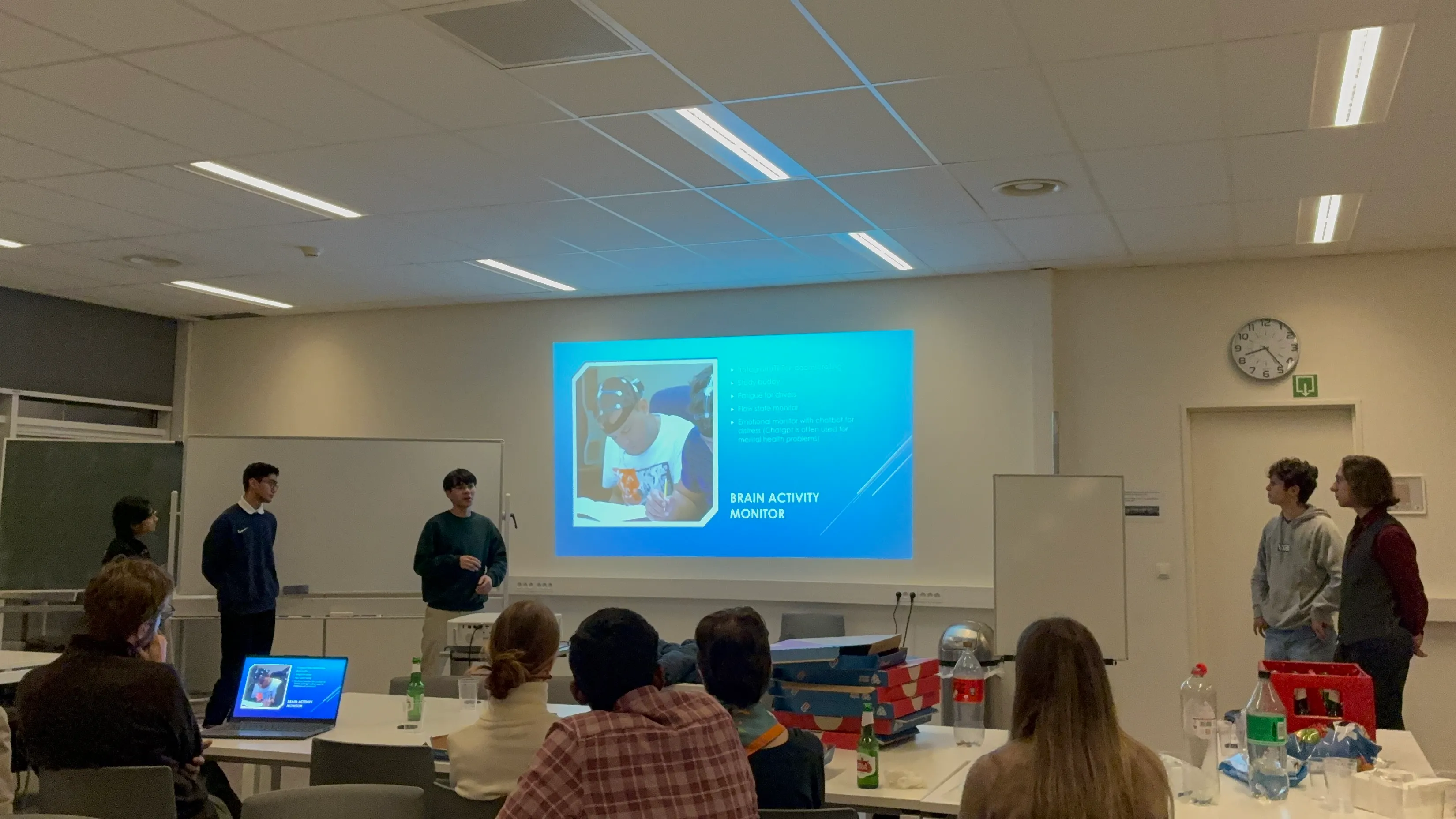
The project also explores practical applications of BCI systems through hands-on prototyping. This includes developing simple interfaces, control systems, or demonstrations that connect theoretical concepts to real-world use cases.
Gallery
Interested in this project?
Learn more about the people behind the project or explore how to get involved through Neurotech Leuven.


